A parking scuff can contain transferred material, damage to your own finish, or both. A different-colored streak does not prove the paint underneath is unharmed. Photograph the area, avoid aggressive rubbing, and arrange an assessment. Cleaning may improve transferred residue, while missing paint, deep damage, or distortion may require a repair specialist.
Record the damage before trying to improve it
Take an overall photograph showing the panel and closer photographs from several angles. Include the edge of the mark and any adjoining trim. If another party, insurance claim, lease return, or repair estimate may be involved, preserve those records before cosmetic work. Describe what happened without guessing the depth: contact with a painted post, another bumper, or an unknown object provides useful context. A detailer can assess appearance, but a photograph alone cannot reliably establish the complete condition beneath transferred material or whether a panel has underlying damage.
Do not turn a small mark into a larger correction
The temptation is to rub until the contrasting color disappears. That makes it difficult to distinguish removal of foreign material from abrasion of the vehicle’s own finish. Household scouring products, improvised solvents, and repeated heavy pressure are poor substitutes for a material-specific assessment. Meguiar’s identifies compounds as abrasive products for paint defects, which is precisely why a compound should not be treated as a harmless universal cleaner. If the surface is cracked, peeling, distorted, or missing paint, stop treating it as an ordinary cleaning task.
Agree on the boundary between detailing and repair
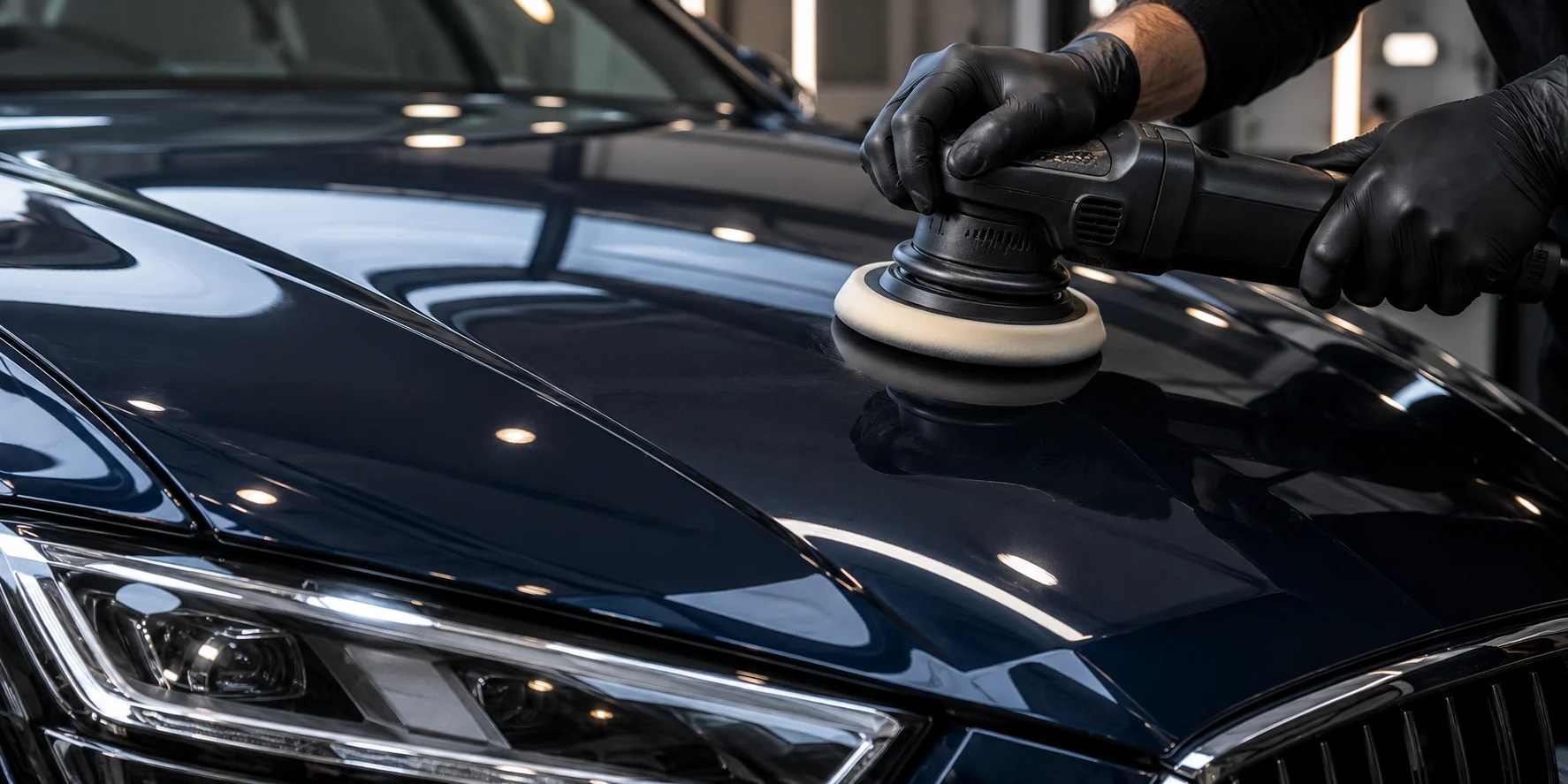
A paint-care appointment may evaluate whether some visible material can be removed and whether suitable refinement improves the surrounding appearance. It cannot replace missing paint or straighten a damaged panel. Ask what improvement is realistic without assuming the entire scuff will disappear. A partial improvement can still be worthwhile if you understand it beforehand, but it should not be described as a completed body repair. For lease or sale preparation, obtain any required repair standards from the receiving party rather than relying on appearance alone.
Make the consultation specific
Send the vehicle year, make, model, panel location, photographs, and any repaint history. Mention film, a wrap, or a matte finish immediately because the treatment decision changes. A Newport Beach mobile visit also needs a suitable place to examine the surface in useful light. If your main concern is a single scuff, say so before booking a whole-car package. This allows the recommendation to focus on assessment, a limited cosmetic service where appropriate, or referral to a repair specialist instead of unnecessary work elsewhere on the car.
A few things to know.
Does another color mean it is only transfer?
No. Transferred material and damage to the original finish can occur together.
Can polishing replace missing paint?
No. Missing paint requires an appropriate repair process; polishing changes the existing surface.
Should I scrape the mark with a fingernail?
Avoid scraping as a home diagnostic. Good photographs and a professional assessment preserve more information without adding another mark.
Sources & further reading
Primary references for the factual context in this guide. Our planning suggestions are general guidance; property rules and product-specific instructions should be confirmed for your situation.
This guide is educational. It is not a vehicle inspection, a manufacturer endorsement, or a promise that a particular service is suitable. See how we prepare our care guides.