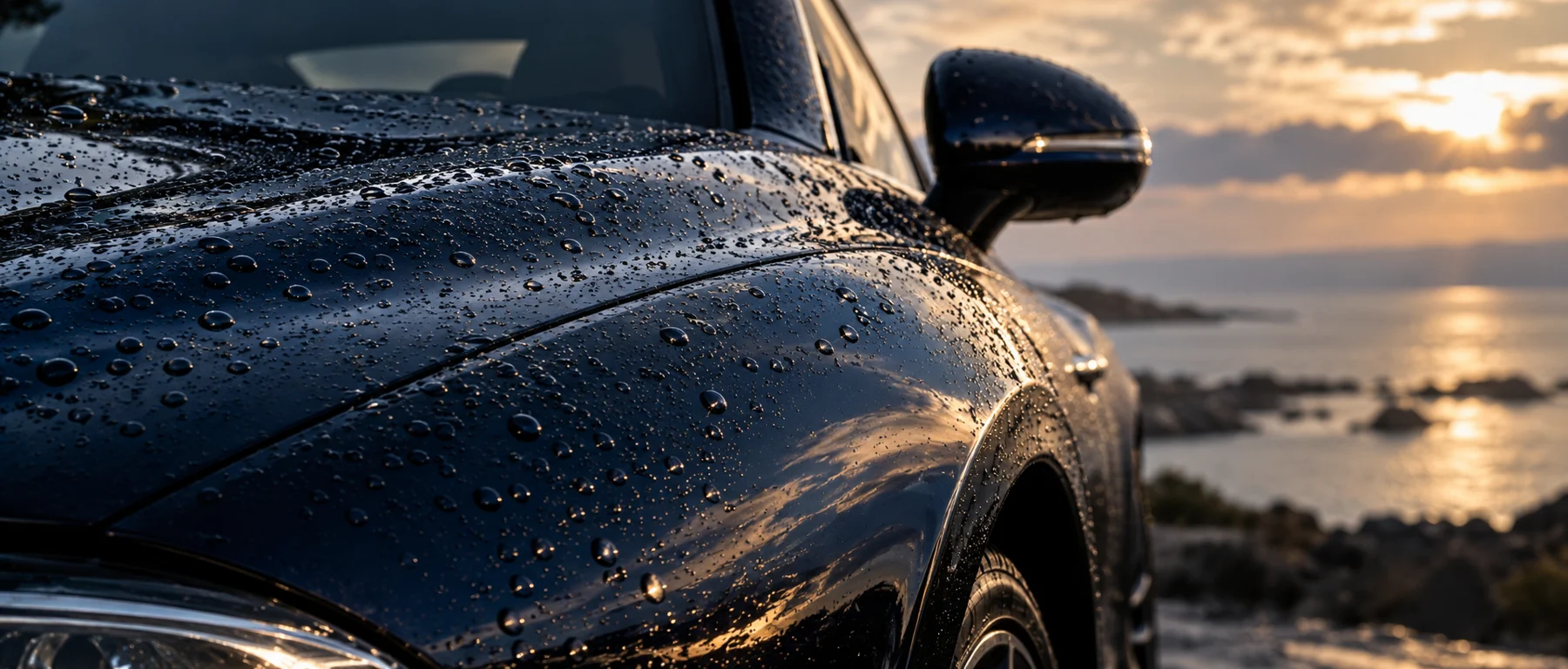
Beading does not mean deposits disappear
Water droplets can look attractive on a protected finish, but they still contain whatever was present in the water. When the water evaporates, deposits may remain. That is why a coated vehicle can still develop visible spotting. Do not treat a coating as permission to leave irrigation or wash water to dry on the car. The useful question is how to manage exposure and drying, rather than whether a protection product makes water irrelevant to the maintenance routine.
Look for the source
Notice where the spots appear and when they return. One side of the car may be exposed to a sprinkler, while another area catches runoff or retains rinse water. Understanding the pattern can be more useful than repeatedly addressing the same marks after each wash. If changing parking position is practical, that may reduce a recurring exposure. Keep notes or photographs for your detailer, especially if the marks appear soon after a particular wash or overnight parking location.
Do not begin with an aggressive treatment
Visible spotting can involve different levels of surface concern, and not every product is suitable for every finish or coating. Avoid improvising with strong household chemicals or repeated polishing before the surface is assessed. Tell the provider what protection is on the car and what you have already tried. Product-specific guidance and a measured assessment are better starting points than assuming that a more aggressive solution will be faster, safer, or necessary for the marks you see.
Make the washing conditions manageable
Choose a suitable place and time so that you can complete the wash and dry without racing against heat and rapid evaporation. Use appropriate equipment and follow the requirements for the vehicle’s finish and protection. Pay attention to areas that release trapped water after the main drying pass. If you use a professional maintenance service, discuss how recurring spots are being managed and whether the normal routine needs adjustment rather than simply repeating the same process.
Review the coating without jumping to conclusions
A change in water behavior does not, by itself, establish exactly what is happening to the protective layer. Contamination, maintenance, and exposure may all be relevant to the assessment. Ask the installer or detailer for a recommendation tied to the actual product and condition. The next step could be appropriate cleaning or a more involved treatment, but it should follow inspection. Keep your product information and care instructions available so the decision rests on useful details rather than guesswork. If irrigation is involved, speak with the property contact about the parking arrangement. Reducing the recurring exposure may be more productive than repeatedly booking a treatment for the same marks.
