Assess before refining
Paint correction starts with understanding the surface. We discuss repainting, previous polishing, existing coatings, and the defects you can see. Photographs are useful for an initial conversation, but the final recommendation depends on an in-person assessment.
Choose an appropriate level
A lighter refinement may improve overall gloss and reduce some visible wash marks. More involved correction may address additional defects where the paint condition supports it. The right approach balances the desired finish with preserving the surface, rather than chasing every mark.
Know what polishing cannot solve
Deep scratches, failed clear coat, chips, and some etched damage may not be safely removable by polishing. Repairs and refinishing are different services. We explain these boundaries before proceeding and do not promise a fixed percentage of defect removal.
Protect the refined finish
Once the agreed refinement is complete, we discuss a compatible finishing protection and a sensible washing routine. A coating may be an option, but it is not a substitute for careful maintenance or a guarantee against future scratches.
What we consider
- Paint condition consultation
- Preparation and appropriate decontamination
- Test area and agreed refinement approach
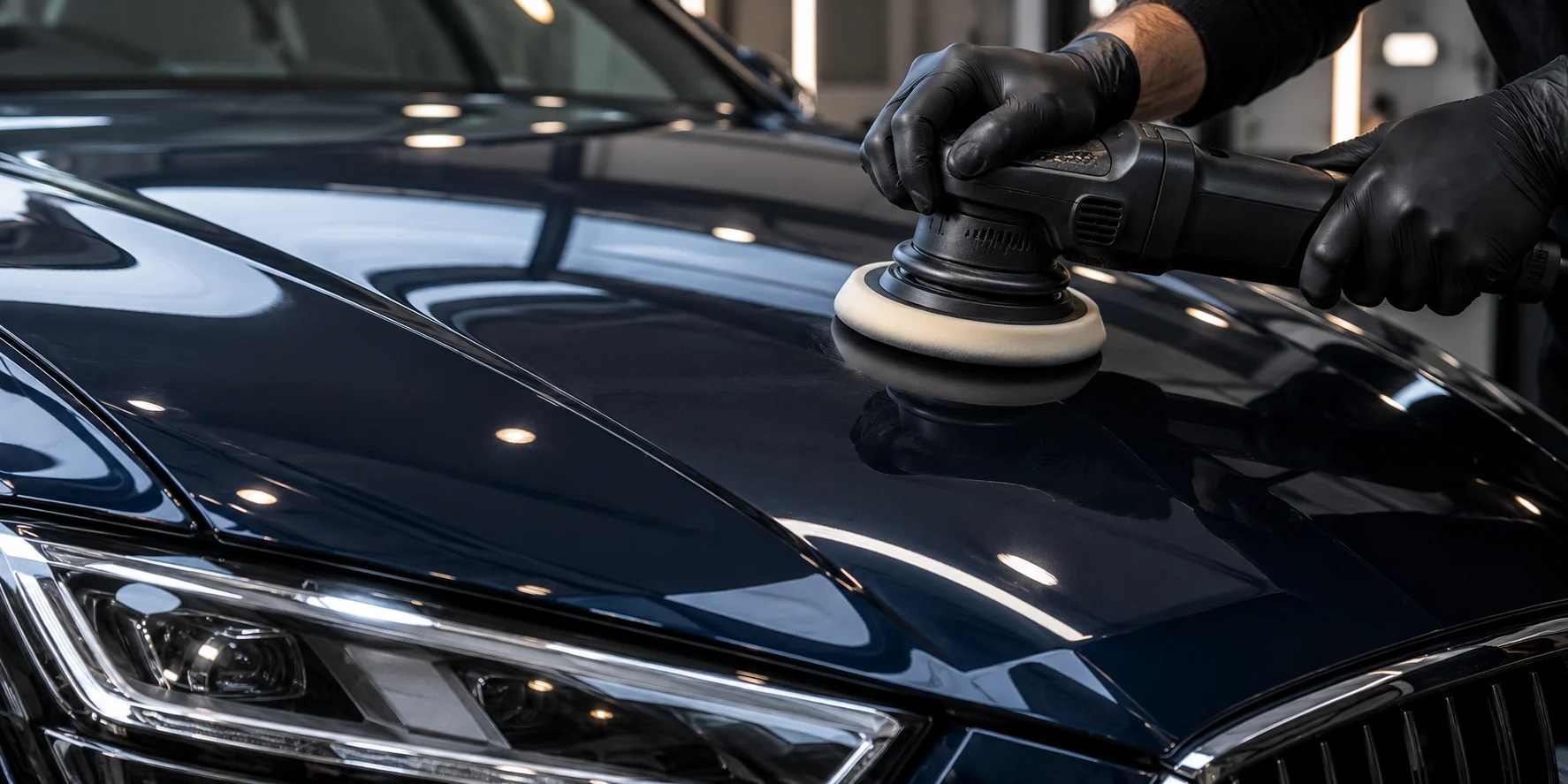
- Machine polishing within the agreed scope
- Finishing protection options
- Aftercare discussion
A few things to know.
Will every scratch disappear?
No. Some defects extend too deeply or involve damaged paint that should not be polished further. We prioritize an appropriate finish over an unrealistic promise.
Can you correct paint at my home?
The working environment needs suitable space, lighting, shelter, and utilities. We confirm whether your location is appropriate for the planned work.
Should I book correction before a coating?
Often the appearance should be addressed before protection is applied, but not every vehicle needs extensive correction. We recommend a scope after assessing the paint.
