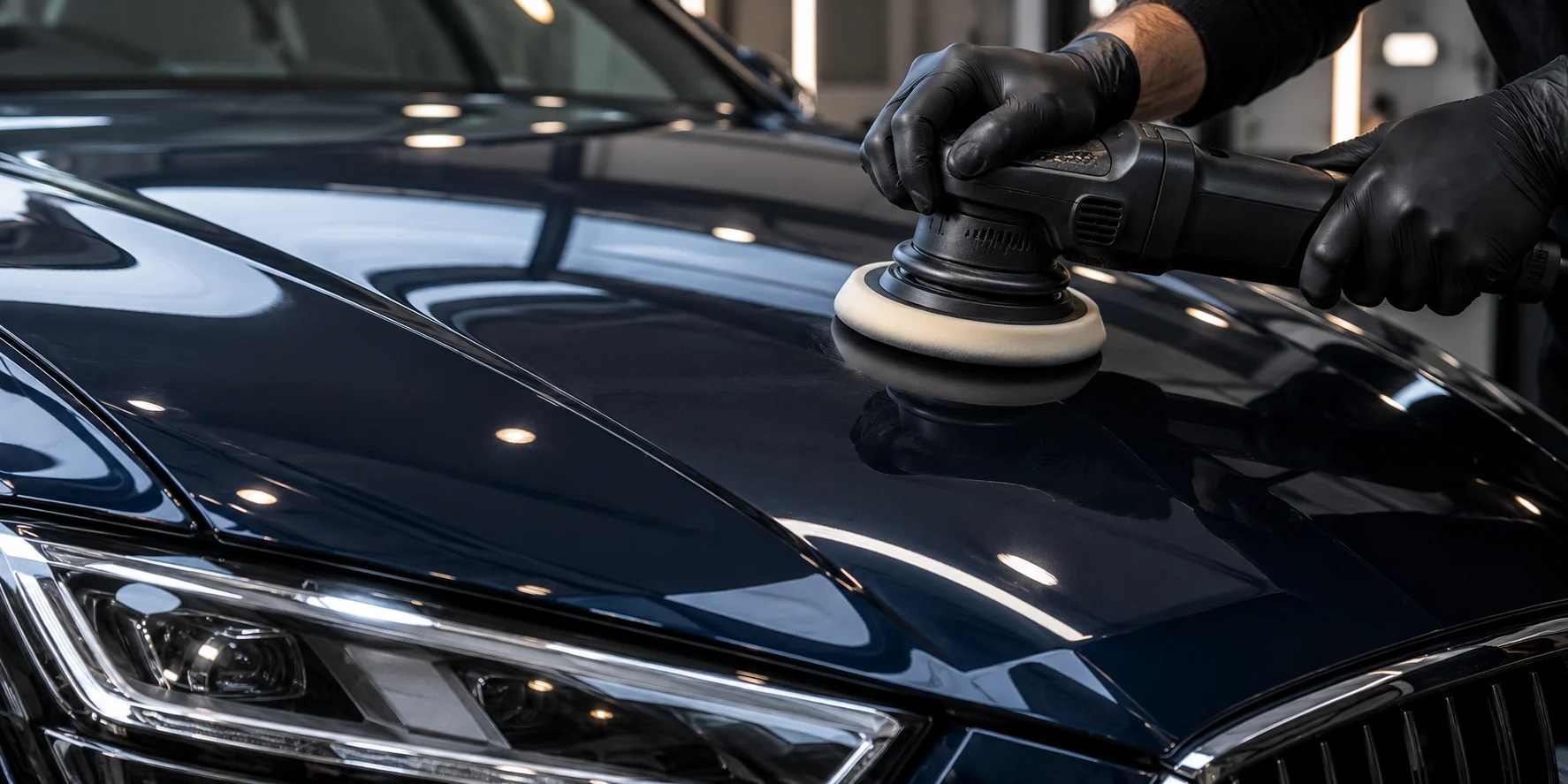
One-stage correction uses a selected polishing approach to balance improvement and finish. Multi-stage correction separates heavier defect work from subsequent refinement. More stages are not automatically better for every car. The sensible choice follows inspection, a test area, paint history, and agreement on the defects that can remain without compromising your goals.
Understand the language before comparing prices
A stage usually refers to a distinct polishing process, not simply one trip over the vehicle. Businesses may count stages differently, so ask what the proposed work actually includes. RUPES offers both all-in-one correction/protection products and dedicated finishing polishes, illustrating why the words polish and protect do not describe a single universal process. Your quotation should explain whether finishing protection is included, whether the plan is intended mainly to improve gloss, and whether a separate refining step is anticipated after heavier work.
Use a test area to define the result
A small representative area provides a useful reference before the entire car is polished. Review it under appropriate lighting and compare the improvement with the untreated area. Discuss what remains and why. The aim is not to chase an arbitrary percentage of correction; it is to choose a result that suits the paint and your use. A daily driver that returns to regular road exposure may call for a different balance than a carefully maintained display car. Your preferences should shape that decision without overruling the condition of the finish.
Paint history changes the conversation
Tell the detailer about repainted panels, previous correction, spot repairs, and any installed film. If the history is unknown, say so. Do not assume a vehicle’s age or price reveals how much polishing is appropriate. A visibly damaged edge, failing clear coat, or a deep isolated mark can require a different response from general wash haze. Sometimes the best decision is to leave a defect visible, obtain repair advice, or improve surrounding gloss rather than pursue complete removal. That limit should be discussed before the service is approved.
Choose the scope you can maintain
After correction, think about who will wash the car and where it will be parked. An expensive refinement does not replace careful ongoing care. For a Newport Beach appointment, confirm that the location provides suitable lighting, working room, and shelter for the proposed process; a tight or poorly lit parking bay may not be appropriate. Ask for a written description of the work, the finishing protection, and the handover instructions. A clear one-stage plan can be a better purchase than a vaguely described multi-stage package with no agreed outcome.
A few things to know.
Does two-stage correction mean every scratch disappears?
No. Stage count describes a process, not a guarantee. Deep or unsuitable defects may remain after either approach.
Can I choose a stage from photos?
Photos help an initial discussion, but inspection and a test area are more useful for confirming an appropriate scope.
Is a one-stage polish always a budget compromise?
No. It may be the appropriate amount of refinement for the paint, your expectations, and your maintenance routine.
Sources & further reading
Primary references for the factual context in this guide. Our planning suggestions are general guidance; property rules and product-specific instructions should be confirmed for your situation.
This guide is educational. It is not a vehicle inspection, a manufacturer endorsement, or a promise that a particular service is suitable. See how we prepare our care guides.