Decontamination targets material attached to the surface; polishing refines suitable paint to improve certain defects or appearance. A car can need one, both, or neither beyond ordinary washing. The decision should follow cleaning and inspection. Do not assume that rough-feeling paint requires aggressive polishing or that a smooth surface is automatically free of visible defects.
Ask what remains after an appropriate wash
A normal wash is the starting point for judging what needs additional attention. Some unwanted material may remain attached even when loose dirt has been removed. Meguiar’s describes detailing clay as a way to address bonded surface contaminants. That purpose differs from buying a polishing service to improve swirl marks. Before booking, describe whether the problem is a rough feel, isolated specks, visible circular marks, dullness, or an unknown film. Each observation gives the detailer a more useful starting point than simply requesting the strongest package.
Avoid turning clay into an automatic habit
Mechanical decontamination is a process to select for a reason, not a ritual to perform at every wash. The surface, contamination, chosen product, and technique all affect whether it is appropriate. Ask whether a chemical approach, a mechanical approach, or a combination is being considered and why. If film, a wrap, matte paint, or a coating is present, disclose it first. A product suitable for one glossy painted surface should not be assumed suitable for every protected or decorative finish on the same vehicle.
Polishing answers a different question
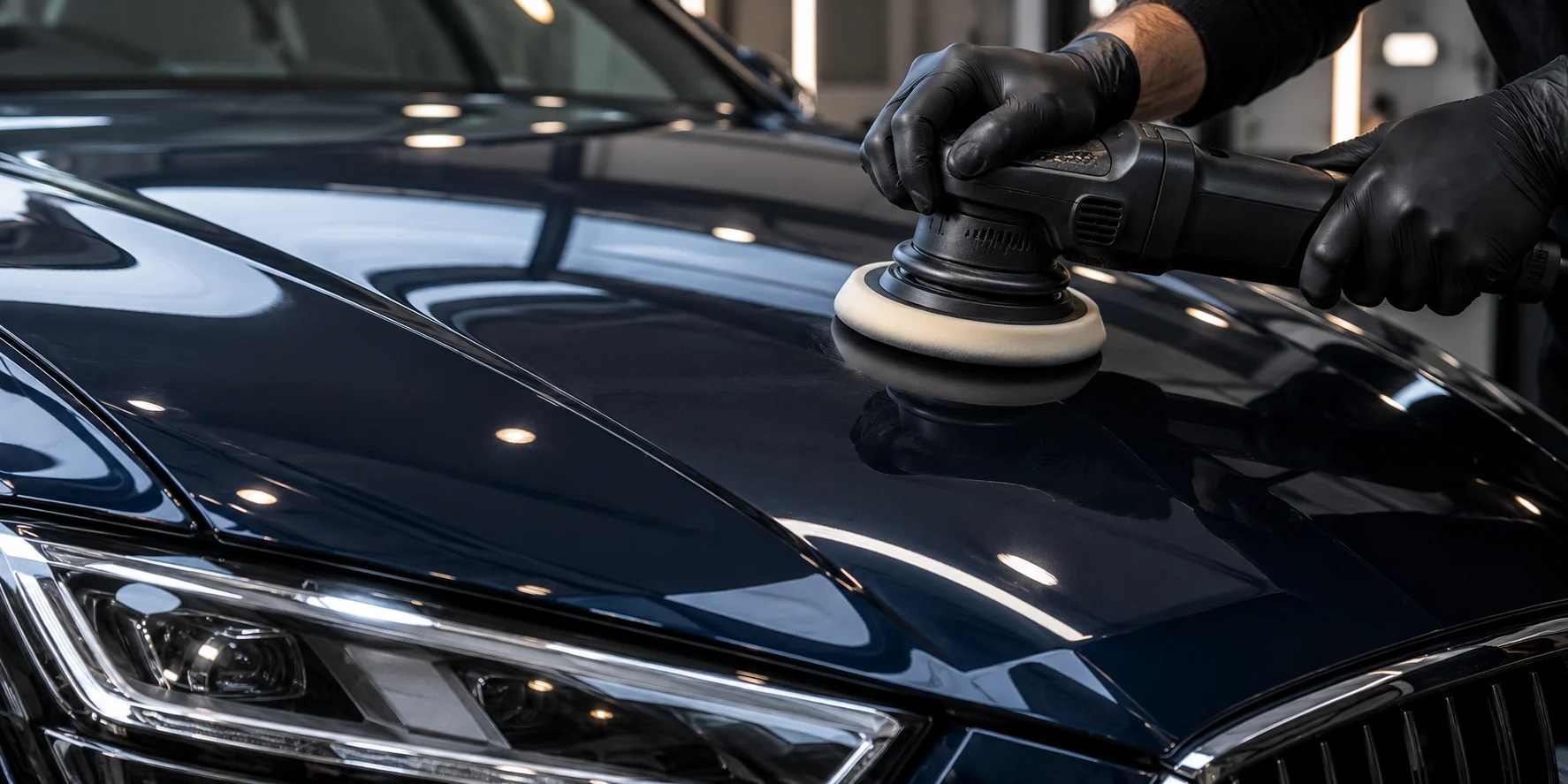
After cleaning and any appropriate decontamination, inspect the actual finish. If you dislike remaining marks, ask whether refinement would meaningfully improve them and what limitations apply. Polishing is not a substitute for identifying damage, and it should not be added merely because contamination removal is scheduled. The paint’s history and condition matter. For a daily driver, accepting a few isolated defects can be a reasonable choice; for a carefully maintained weekend car, a targeted refinement may better match the owner’s priorities.
Request a quote in clear phases
A useful plan separates washing, contamination assessment, any selected removal process, optional refinement, and finishing protection. This makes it clear where the labor and decisions sit. For a Newport Beach consultation, describe recent exposure and storage without assuming the neighborhood determines the treatment: two cars parked on the same street can have very different conditions. Send broad panel photographs and close views of the concern. If the finish has been repainted or previously corrected, include that history so preparation can be planned with preservation in mind.
A few things to know.
Does claying remove scratches?
It is intended to address bonded contamination, not replace a polishing assessment for paint defects.
Does every coating appointment need polishing?
Not automatically. The paint should be assessed and the appearance agreed upon before protection is selected.
Should rough paint be polished immediately?
First establish whether attached contamination is responsible. Cleaning and assessment should guide the next step.
Sources & further reading
Primary references for the factual context in this guide. Our planning suggestions are general guidance; property rules and product-specific instructions should be confirmed for your situation.
This guide is educational. It is not a vehicle inspection, a manufacturer endorsement, or a promise that a particular service is suitable. See how we prepare our care guides.