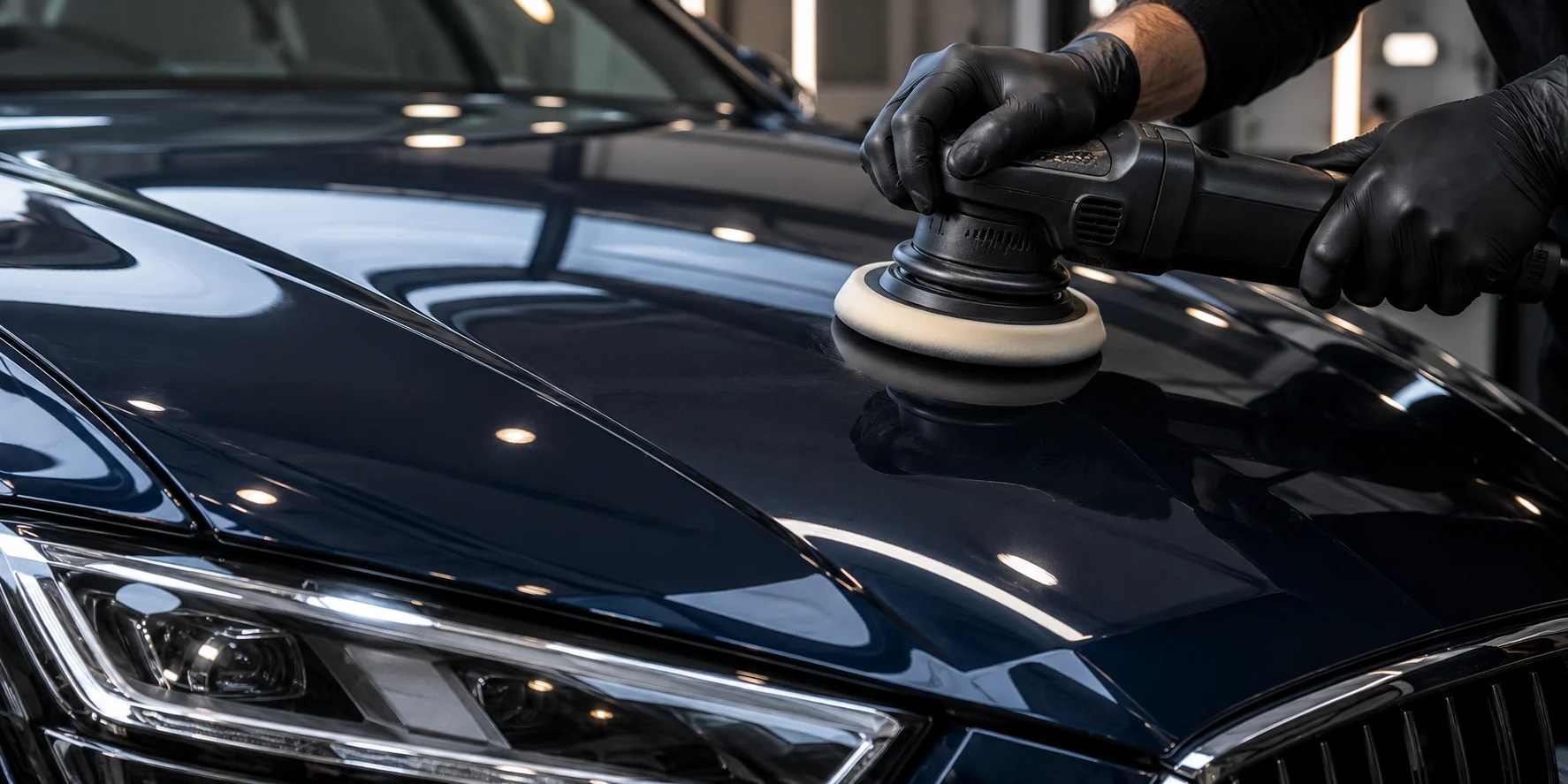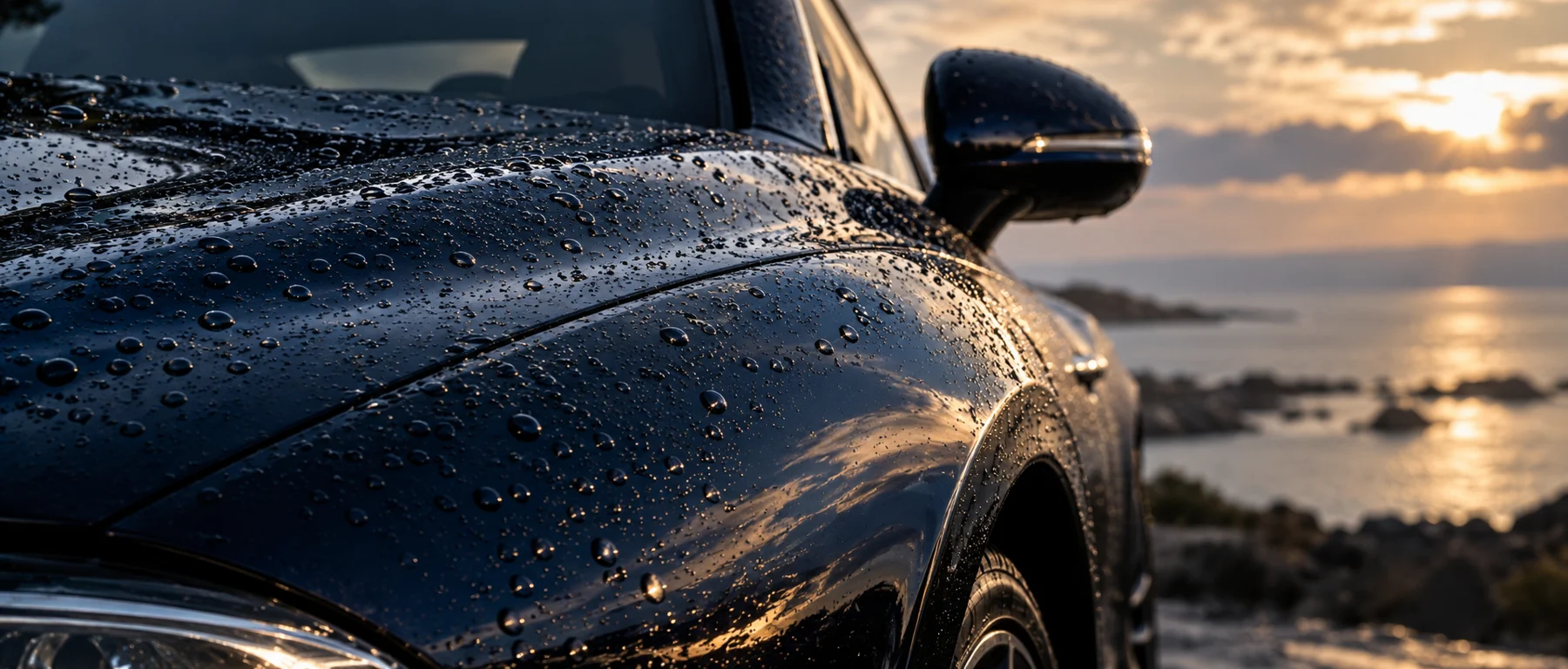
Mineral deposits and a glass coating are separate issues. A coating should not be applied as a way to hide persistent spots. First identify whether the marks are on the exterior, interior, film, or glass itself; assess an appropriate cleaning method; then consider compatible protection. Visibility and the vehicle manufacturer’s guidance take priority over water-beading demonstrations.
Locate the problem before choosing a treatment
Clean a small area according to the vehicle’s glass-care guidance and look from inside and outside. Smearing on the cabin side, marks on exterior glass, and imperfections in an installed film need different conversations. Tell the detailer about aftermarket tint, windshield replacement, coatings, and any special surface treatment. Photographs against different backgrounds can help explain the concern, particularly if the spots are visible only in certain light. Avoid making the first appointment a coating purchase when the underlying issue has not yet been identified.
Why ordinary glass cleaning may not be enough
Gtechniq distinguishes routine glass cleaning from products intended for mineral buildup and other stubborn contamination. That does not mean every stubborn mark should receive an abrasive polish. The glass specification, nearby materials, and existing treatments must be considered. A professional may recommend staged assessment rather than one aggressive treatment over every window. If there are cracks, chips, or a visibility concern that persists while driving, obtain appropriate glass-service advice. Cosmetic detailing is not a substitute for evaluating damaged automotive glazing.
Ask what a coating changes and what it does not
A suitable glass coating is a separate finishing decision after the surface is prepared. Ask which windows are included, how the product interacts with the existing surface, and what the instructions require for application and ongoing care. Do not infer that a product used on paint is automatically suitable for the windshield. Also discuss wiper condition and any current chatter or smearing before work begins. A promise of attractive water behavior should never replace checking that the windshield remains clear in the conditions in which you actually drive.
Reduce recurring exposure in a practical way
If the same side of the car repeatedly develops spots, look at where it is parked and whether nearby irrigation reaches it. Moving a parking position may be more useful than repeatedly correcting the same glass. After washing, follow the appropriate drying guidance instead of leaving the result to evaporation. For a Newport Beach mobile consultation, send photos of the glass and describe when the marks become visible: early sun, nighttime lights, or after washing. That description helps distinguish your visibility complaint from a general request to add protection.
A few things to know.
Will coating hide existing glass spots?
It should not be sold for that purpose. Existing marks need assessment before a separate protection decision.
Can tinted glass be polished?
Do not assume that it can. Identify the film location and glass treatment, then follow the film and vehicle manufacturers’ guidance.
Are all glass spots permanent?
No, but photographs alone may not reveal whether the issue is removable residue, etched damage, film damage, or another defect.
Sources & further reading
Primary references for the factual context in this guide. Our planning suggestions are general guidance; property rules and product-specific instructions should be confirmed for your situation.
This guide is educational. It is not a vehicle inspection, a manufacturer endorsement, or a promise that a particular service is suitable. See how we prepare our care guides.