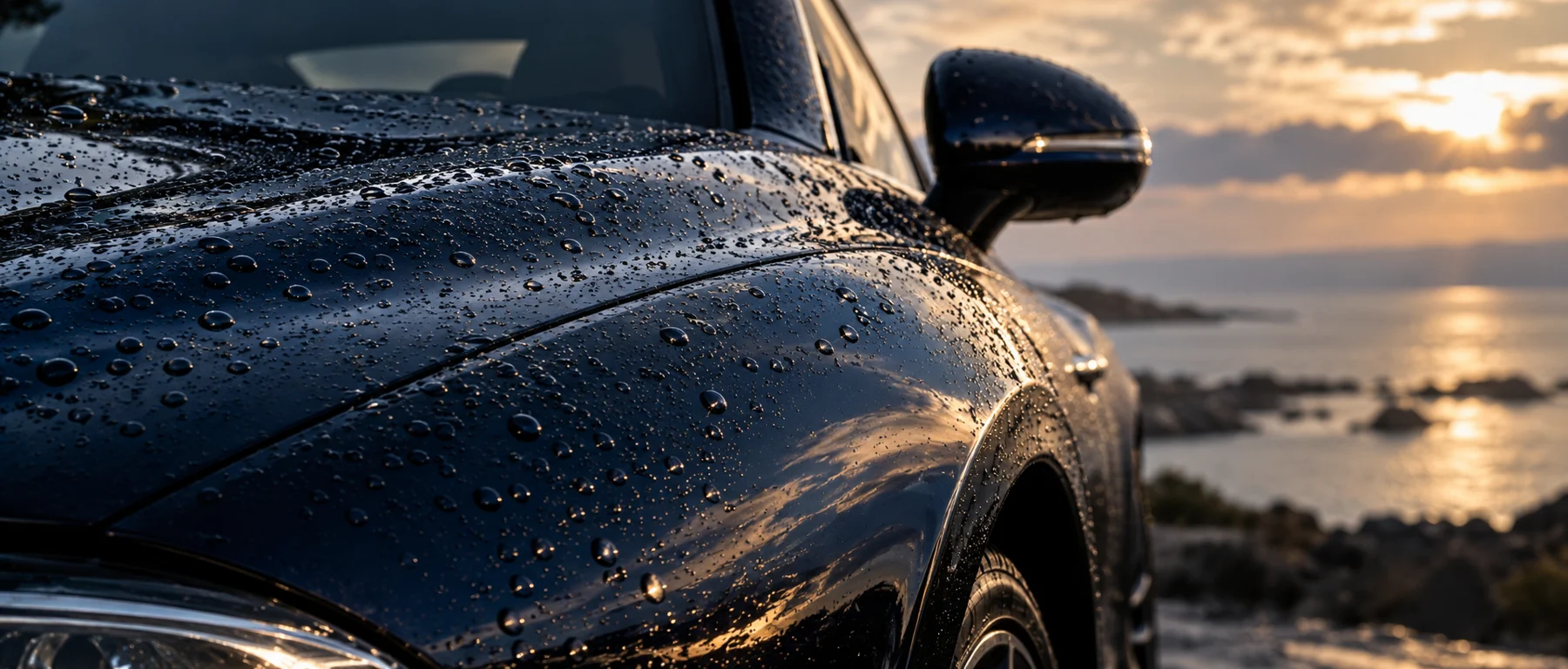
A coated car still needs a deliberate drying routine. Use clean, suitable drying media and follow the coating’s care instructions; do not assume water beading means the vehicle can be left wet. Air drying tools can help with appropriate crevices, while a clean towel can address remaining water. Inspect the finish and trapped-water areas before putting equipment away.
Prepare for drying before the wash starts
Set out enough clean drying material for the whole vehicle and keep it protected from the ground. Check the towel for trapped debris rather than trusting how soft it feels. Plan the wash around shade and manageable sections so drying does not become a hurried final task. Gtechniq’s wash guide specifically includes drying rather than allowing the car to dry naturally. The broader planning lesson is simple: if you lack enough clean material or a suitable working environment, solve that before you begin washing.
Choose a method that suits the surface
A towel and an appropriate vehicle-drying air tool are options, not competing badges of expertise. What matters is clean equipment, controlled handling, and respect for the vehicle’s instructions. Avoid dragging a wet towel through a dirty lower section and then returning to the hood. Likewise, do not use an improvised air source that can deposit contamination or direct force into unsuitable areas. Discuss the drying method with your detailer when collecting coating aftercare instructions, especially around installed film edges, decorative components, and aftermarket accessories.
Do not add a product without checking compatibility
A product marketed as a drying aid can have its own protection or appearance characteristics. Ask whether it belongs in the existing coating’s maintenance system before using it simply to make a towel glide differently. Keep a record of what has been applied so a later change in appearance can be evaluated sensibly. If the surface seems difficult to dry, that does not by itself establish that the coating has failed. Describe the behavior and recent wash products to the person responsible for the maintenance recommendation.
Finish with the areas that release water later
After the main panels, inspect mirror housings, exterior handles, grille details, and other locations where accessible water may remain. Open only what is appropriate and safe under the vehicle’s guidance, and keep drying tools away from dirty hinges or lubricated mechanisms. A final walkaround can reveal a missed section before it leaves a trail down a clean panel. For Newport Beach owners whose cars move from a shaded garage into bright light, check the finish under more than one lighting condition instead of judging the entire result from one dim parking space.
A few things to know.
Can I just drive the car dry?
Do not rely on driving as a complete drying process. Water can remain in crevices or dry on the surface before it is removed.
Does every coated car need a drying aid?
No universal rule applies. Follow the specific coating’s care instructions and confirm compatibility before adding another product.
Should I use the same towel for wheels and paint?
Keep wheel-care and paint-care towels separate to reduce cross-contamination.
Sources & further reading
Primary references for the factual context in this guide. Our planning suggestions are general guidance; property rules and product-specific instructions should be confirmed for your situation.
This guide is educational. It is not a vehicle inspection, a manufacturer endorsement, or a promise that a particular service is suitable. See how we prepare our care guides.